
9 Real Ways to Support Someone with ADHD (Without Making It Worse)

What Supporting Someone with ADHD Actually Looks Like
If you're here, you probably care about someone with ADHD. Maybe it's your partner, friend, coworker, or family member. And you've noticed that sometimes they struggle with things that seem straightforward to you.
They might forget plans you made two days ago. Miss deadlines despite caring deeply about the work. Take three weeks to respond to a text message. Start twelve projects and finish none of them. Get completely absorbed in something random while critical tasks sit untouched.
Here's the thing: ADHD isn't about not caring. It's about a brain that works fundamentally differently.
Traditional support advice often makes things worse. "Just remind them!" creates a parent-child dynamic. "Help them stay organized!" can feel condescending. "Be patient!" without understanding why leads to resentment on both sides.
What you need to know upfront:
- ADHD is a neurological condition, not a character flaw or lack of discipline
- It affects executive function - the brain's ability to plan, initiate, and complete tasks
- Dopamine regulation is different, which impacts motivation and focus
- What looks like "not trying" is often the brain literally unable to start
- Strategies that work for neurotypical brains often fail spectacularly for ADHD brains
The goal isn't to "fix" the person with ADHD or compensate for every struggle. It's to understand how their brain works and adjust how you interact so both of you can maintain a healthy, balanced relationship.
9 Real Ways to Actually Help
These aren't generic tips about "being supportive." They're specific approaches based on how ADHD brains actually function - and how relationships work when one person's brain operates on a different operating system.
1. Learn How ADHD Actually Works (Not Just the Stereotypes)
Most people think ADHD means hyperactive kids who can't sit still. That's about 20% of the picture.
Here's what ADHD actually involves:
- Executive dysfunction: Difficulty with planning, organizing, starting tasks, and switching between tasks
- Working memory issues: Forgetting what you just heard or were about to do
- Time blindness: Poor sense of how much time has passed or how long tasks take
- Dopamine regulation problems: Difficulty generating motivation for unrewarding tasks
- Emotional dysregulation: Feelings that hit harder and faster than expected
- Rejection sensitivity: Intense emotional response to perceived criticism or rejection
When someone with ADHD says they "forgot" to reply to your message for three weeks, they're not exaggerating. Their working memory actually dropped it. When they can't start a simple task despite knowing it needs to be done, that's not laziness - that's their brain not producing the dopamine needed to initiate action.
Why this matters:
When you understand the neuroscience, you stop taking things personally. You realize that when they hyperfocus on building a Lego set while their important email sits untouched, it's not about priorities - their brain literally can't generate motivation for the boring task until there's external pressure (like a deadline crisis).
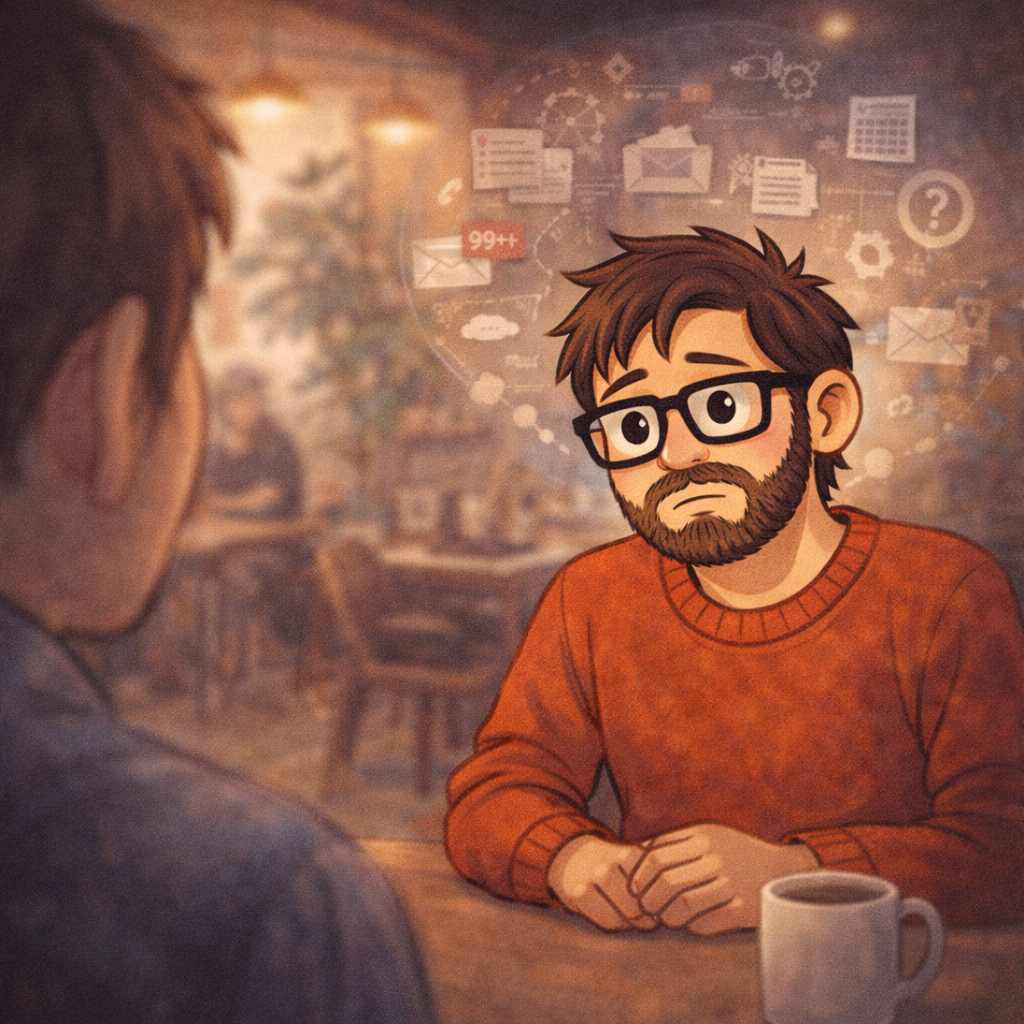
2. Stay On Equal Footing (Don't Become Their Manager)
The biggest relationship killer? Sliding into a parent-child dynamic without realizing it.
It starts innocently. You remind them about appointments because they've missed a few. You double-check their work before it goes out. You manage their schedule because "it's just easier that way." You become the responsible one, and they become the one who needs help.
This damages both of you:
- They lose confidence and become dependent
- You build resentment from carrying all the mental load
- The relationship loses its equality and mutual respect
- They stop developing their own coping systems
Instead, try this:
If they haven't set up systems for managing their responsibilities, ask if they'd like help brainstorming solutions - then let them implement whatever they choose. If they're missing important things, have a conversation about what support would actually help without you taking over.
Remember: You're their equal partner, friend, or colleague. Not their executive assistant or life coach.
3. Make Your Shared Space ADHD-Friendly
Environment matters more for ADHD brains than neurotypical ones. Small changes can dramatically reduce daily friction.
What "ADHD-friendly" actually means:
- Visible storage: If it's hidden in a drawer, it doesn't exist to an ADHD brain. Clear bins, open shelving
- Fewer steps: Every additional step (open drawer, move item, close drawer) is a point where they'll get distracted
- Designated landing zones: Keys, wallet, phone go in the same spot every time. No thinking required
- Minimal visual clutter: Too many things in view = cognitive overload. Keep surfaces clear when possible
- Strategic reminder placement: Notes where they'll actually see them (not stuck to a wall they walk past 40 times without noticing)
This isn't about "babying" them. It's about designing an environment that works with how their brain actually functions, reducing the constant low-level struggle.
4. Build Flexibility Into Expectations

ADHD brains struggle with time estimation and task switching. What you need to know: they genuinely can't always predict how long something will take or stick to rigid schedules.
This doesn't mean accepting chronic lateness or no-shows. It means building buffer time and having backup plans.
Instead of "Be here at 7pm sharp," try "We need to leave by 7:15 to make the 8pm movie. I'll give you a heads up at 6:45."
Instead of getting frustrated when they're running late (again), build in 15-20 minutes of buffer time and bring a book. Your blood pressure will thank you.
But here's the balance:
Flexibility doesn't mean no boundaries. You can say "I understand time management is hard for you, and I'm happy to build in buffer time. But if you're going to be more than 20 minutes late, I need a text so I'm not sitting there wondering what happened."
Accommodating ADHD challenges while maintaining reasonable expectations for consideration and communication.
5. Practice Strategic Patience (Not Just Generic "Be Patient")
"Just be patient" is useless advice. Here's what actually helps:
Recognize what's ADHD and what's not:
- Forgetting to respond to messages? ADHD working memory issue
- Taking days to start a task they find boring? Dopamine deficit, not procrastination
- Getting distracted mid-conversation? Executive function challenge, not disrespect
- Consistently disregarding your feelings after you've clearly communicated them? That's not ADHD, that's a relationship problem
Strategic patience means understanding the neurological challenges while still maintaining standards for how you deserve to be treated.
When they're stuck in task paralysis, you might offer: "I know starting is the hardest part. Would it help if we just sat together while you work on it?" Sometimes body doubling (having someone present) provides just enough external structure to get started.
Struggling with task paralysis yourself? The Executive Function Survival Guide has the brain-based protocols that actually work.
See the Guide6. Communicate Like Their Brain Works (Specific, Direct, Clear)

ADHD brains struggle with vague communication, implied expectations, and reading between the lines.
What doesn't work:
- "Could you maybe try to remember to...?" (Too vague, sounds optional)
- "I mentioned this last week..." (They probably forgot, working memory issue)
- Hints and indirect communication (Will completely miss these)
- "Just do it when you get a chance" (When is "when I get a chance"? Their brain doesn't know)
What works better:
- "I need you to send that email by Thursday at 5pm. Can you set a reminder right now?"
- "This is important to me. I need a clear yes or no."
- "I'm going to text you a reminder tomorrow morning. When you get it, please handle it immediately."
- Being direct about feelings: "When you cancel plans last-minute, I feel hurt and unimportant."
This isn't about dumbing things down. It's about removing the cognitive load of decoding subtext when their brain is already working overtime on everything else.
7. Notice Progress, Not Just Problems
People with ADHD typically have years of negative feedback. School, work, relationships - they've heard what they're doing wrong thousands of times.
What they rarely hear: acknowledgment when they do manage something difficult.
This matters because:
ADHD brains run on interest and novelty. Positive reinforcement actually helps rewire neural pathways, making it easier to repeat the behavior. Criticism, even constructive, often triggers shame spirals that make the problem worse.
What this looks like:
- "I noticed you responded to my text right away today. That made me feel really valued."
- "You've been on time for our last three meetups. I really appreciate that."
- "I know starting that project was really hard for you. I'm impressed you pushed through."
Not participation trophies. Genuine acknowledgment of effort in areas where their brain makes things legitimately harder.
8. Recognize What ADHD Brings to the Table

ADHD isn't just deficits. The same brain differences that create challenges also create genuine strengths.
What ADHD often brings:
- Hyperfocus: The ability to dive deep into something interesting for hours
- Creative problem-solving: Thinking in non-linear ways that find unconventional solutions
- High energy and enthusiasm: When engaged, they bring contagious excitement
- Crisis management: ADHD brains often excel under pressure when others panic
- Empathy and emotional depth: Feeling things intensely includes positive emotions
- Spontaneity: The ability to pivot and adapt, try new things without overthinking
These aren't consolation prizes. They're real strengths that contribute to relationships, work, and life in meaningful ways.
When you only focus on what's hard for them, you miss what they bring that you might not. The person who can't remember to send routine emails might be the one who comes up with brilliant solutions when everyone else is stuck. The friend who's chronically late might also be the one who drops everything to help when you're in crisis.
9. Hold Boundaries (For Both of You)
Supporting someone with ADHD doesn't mean accepting behavior that hurts you or the relationship.
Boundaries you might need:
- "I understand executive function is hard, but I need communication when plans change."
- "I'm happy to help brainstorm solutions, but I can't take on managing your responsibilities."
- "I need you to work on developing systems for [specific issue]. I can support you, but I can't fix it for you."
- "If you commit to something, I need to be able to trust that commitment. If that's not realistic right now, please tell me upfront."
Boundaries they might need:
- Time to process information before responding
- Space to work through tasks without hovering or checking in
- Direct communication instead of hints or passive-aggression
- Understanding that some days will be harder than others
Healthy relationships require both people to show up. ADHD explains challenges but doesn't excuse neglecting the relationship entirely. And your needs matter just as much as theirs.
Bottom Line
Supporting someone with ADHD isn't about managing them, fixing them, or becoming their external executive function system.
It's about understanding how their brain works differently, adjusting your communication and expectations accordingly, and maintaining a relationship built on mutual respect and equality.
The most important things to remember:
- ADHD is neurological, not behavioral. The struggles are real, not choices
- What looks like not caring is often executive dysfunction or dopamine deficit
- Accommodation doesn't mean no boundaries. Both people's needs matter
- The same brain differences that create challenges also bring real strengths
- You can be understanding while still requiring respectful treatment
- Stay equals. Don't slip into parent-child dynamics
When both people understand ADHD, communicate clearly, build appropriate flexibility, and maintain healthy boundaries, relationships don't just survive - they can actually thrive.
The person with ADHD gets to feel understood instead of constantly judged. You get to stop taking things personally and feeling frustrated by behaviors that aren't about you.
That's worth the effort of learning how to support them well.